Emirates pivots to whole foods in clean-label shakeup of vegan menus
Emirates is positioning itself at the forefront of the clean label movement in the sky.



Emirates is positioning itself at the forefront of the clean label movement in the sky.
Emirates has announced it is moving away from ultra-processed, "lab-based" meat substitutes in favour of a whole-food, farm-to-fork philosophy.
The airline, which currently serves half a million vegan meals annually, plans to debut a new culinary concept in 2027 that elevates legumes, grains, and seasonal vegetables as the "heroes of the plate."
The move marks a departure from the "engineered meat" trend that has dominated the plant-based sector for years. Instead of replicating animal proteins with soy or pea-based isolates, Emirates’ development team is drawing on global culinary traditions that are inherently plant-forward.
The shift reflects a growing consumer scepticism toward ultra-processed foods (UPFs). Doxis Bekris, Emirates’ vice president of food & beverage design, confirmed that while lab-based alternatives are commendable, they no longer align with the airline's long-term vision for health and transparency.
"We want to shift from substitutes to a celebration of plants, where it’s not about what’s missing – but instead what is gained in authenticity," Bekris stated. The upcoming 2027 menu will prioritise ingredients like Mediterranean mezze, Levantine grains, and a suite of African-inspired stews, including South African chakalaka and Ethiopian-style groundnut stews.
The announcement comes as Emirates reports a 60% increase in its vegan recipe rotation since 2024, now maintaining 488 unique plant-based dishes across 140 destinations. Interestingly, the airline attributes much of this demand to non-vegan passengers who select plant-powered plates as a "lighter" option that is easier to digest during long-haul travel.
The airline's data reveals that London remains the top destination for vegan meal orders, followed by Sydney and Bangkok. Significant growth is also being recorded across African markets, particularly in Kenya, Uganda, and Egypt, signalling a global shift in dietary preferences toward traditional, plant-rich diets.
A cornerstone of this new strategy is Emirates’ "farm-to-fork" pipeline, fuelled by Bustanica, the world’s largest hydroponic vertical farm. This joint venture provides the airline’s catering facilities with pesticide-free leafy greens – including arugula and spinach – delivered directly from the farm to the tray.
This vertical integration allows the airline to maintain the "back-to-basics" approach its customers are increasingly demanding. By 2027, this philosophy will extend to all classes of travel:
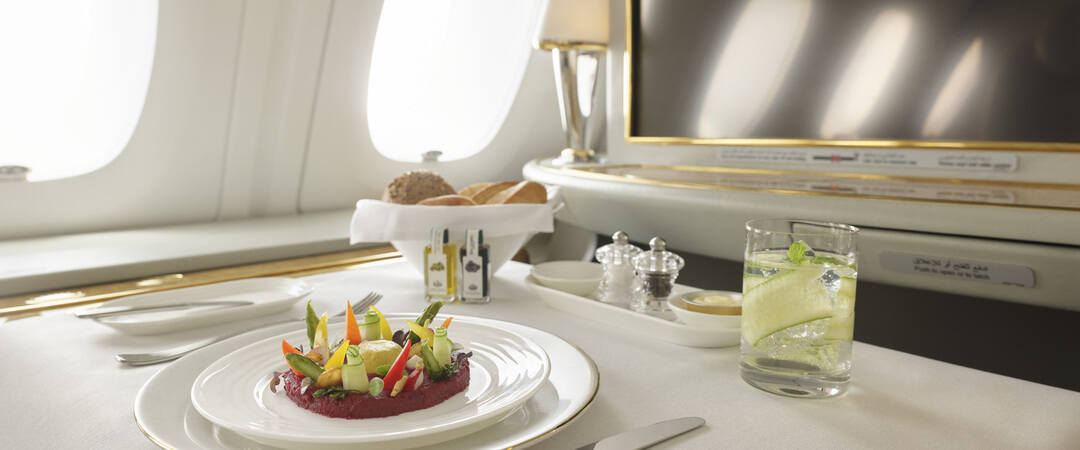
Photo: Emirates vegan cuisine in the sky Beetroot tartare; source -The Emirates Group